
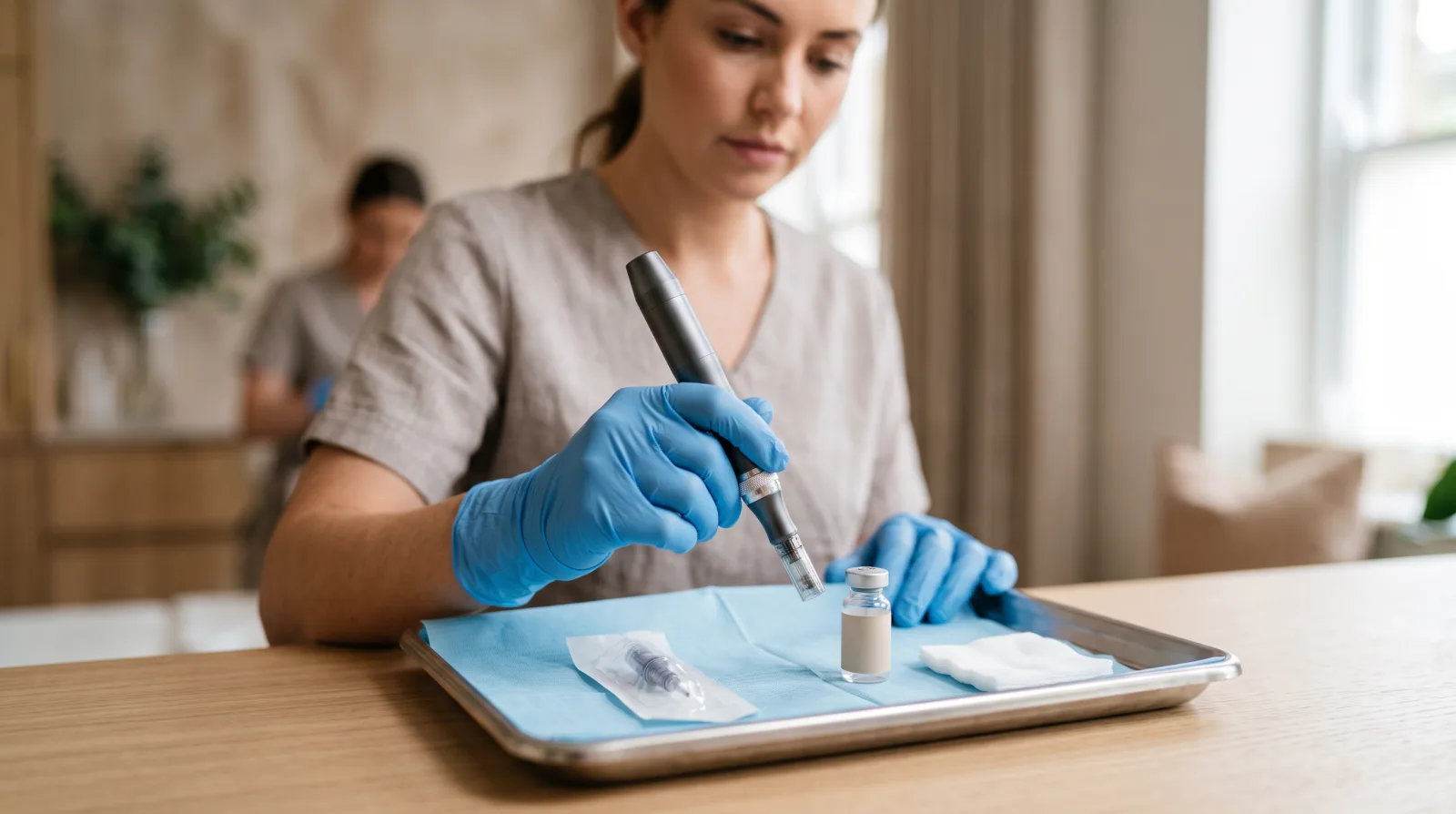
Microneedling, also called collagen induction therapy, is a minimally invasive procedure that creates controlled microchannels in the skin to stimulate wound-healing pathways. The peer-reviewed evidence in 2024 and 2025 supports its use for acne scars, post-inflammatory hyperpigmentation, and select dermatologic conditions. Older reviews flagged anecdotal recommendations; the newer systematic literature is more confident, with caveats.
What microneedling is, in clinical terms
Microneedling devices use fine needles, typically 0.25 mm to 2.5 mm in length, to create controlled micro-injuries in the dermis. The injuries trigger a wound-healing cascade involving fibroblast activity, collagen and elastin synthesis, and epidermal turnover. The treatment is delivered with manual rollers, motorised pens, or radiofrequency-assisted devices that combine the needling with thermal energy.
The comprehensive 2024 review in Cureus groups the technique into three categories, manual, motorised, and RF-assisted, and notes that depth and frequency are the variables most consistently associated with outcomes in the literature.
The evidence shift through 2024 and 2025
The older microneedling literature read cautiously. A 2017 review in the Indian Dermatology Online Journal described the evidence base as predominantly anecdotal, with most recommendations grounded in small studies and clinical experience rather than controlled trials.
The picture has changed. The 2024 Cureus review and a 2025 systematic review of microneedling for non-cosmetic dermatologic conditions both report that the evidence has matured. Across pooled studies, microneedling now shows consistent efficacy for acne scarring, hyperpigmentation, alopecia (when combined with topical minoxidil or PRP), and stretch marks.
What changed: better-designed RCTs, larger sample sizes, and clearer reporting of needle depth, session count, and adjunct use. The literature is no longer a collection of case series, it is a body of work with reproducible outcomes for specific indications.
Indications with the strongest support
Across the recent systematic literature, the indications with the most consistent published support are:
- Atrophic acne scarring, particularly icepick and rolling scars, with multiple RCTs reporting clinically significant improvement.
- Post-inflammatory hyperpigmentation, improvement in melanin index across pooled studies, with particularly strong outcomes when paired with topical depigmenting agents.
- Striae (stretch marks), improvement in texture and elasticity for both striae rubra and striae albae.
- Androgenetic alopecia, efficacy demonstrated when combined with topical minoxidil or platelet-rich plasma, with meta-analytic support published in 2024.
- Photoageing and fine lines, improvement in skin texture and dermal density, particularly for the periorbital and perioral regions.
Where the evidence is still thin: melasma (mixed results, some risk of post-treatment pigmentation flare), keloid and hypertrophic scarring (caution required), and routine "skin tightening" claims for which the marketing has run ahead of the data.
Safety profile and what the literature flags
The reviewed literature reports a generally favourable safety profile. Common adverse events are erythema, transient pinpoint bleeding, and post-procedural sensitivity, typically resolving within days. Serious events are rare but include infection (particularly when sterility protocols slip), tram-track scarring with overly aggressive treatment, and post-inflammatory hyperpigmentation in higher Fitzpatrick skin types.
The British Association of Dermatologists' service standards sit alongside the evidence as the practical UK reference for the standards under which dermatologic procedures should be delivered. They are the right benchmark for any practitioner offering microneedling outside a hospital setting.
UK regulatory position
Microneedling sits in a particular regulatory bracket in the UK. The devices themselves are typically CE/UKCA-marked as medical devices and fall under the MHRA. The clinical practice falls under your professional regulator and, where applicable, the relevant national clinical regulator, CQC in England, with HIS, HIW and RQIA in the devolved nations.
The licensing scheme under the Health and Care Act 2022 is likely to bring deeper microneedling, particularly RF-assisted microneedling and procedures performed at depths above the epidermis-papillary dermis interface, into the formal local-authority licensing tier when secondary legislation is finalised.
For now, the evidence-based read is: microneedling has earned its place in clinical aesthetics for specific indications. The regulatory frame around how it is delivered is tightening. The practitioners who document scope, technique, and competence now will be the ones whose practice survives the licensing transition without disruption.
The RAG Pathway is the four-week programme designed to land practitioners aligned with JCCP, CPSA, MHRA and the incoming licensing-scheme expectations before the regulations tighten. It covers scope of practice, documentation, and the procedural standards that apply across injectables, energy devices, and microneedling.
FAQ
Is there NICE guidance specifically for microneedling?
No standalone NICE guideline addresses microneedling as a category. The British Association of Dermatologists produces the most relevant UK clinical reference points, with their guidelines accredited by NICE. The peer-reviewed dermatology literature provides the substantive evidence base.
What does the 2024 evidence say about microneedling for acne scars?
The recent systematic literature reports consistent efficacy for atrophic acne scarring, particularly icepick and rolling scars, with multiple RCTs showing statistically significant improvement. The strongest results emerge when microneedling is integrated with topical or procedural adjuncts, rather than as monotherapy.
Is microneedling safe in higher Fitzpatrick skin types?
It can be, but the evidence flags an elevated risk of post-inflammatory hyperpigmentation in skin types IV–VI, particularly with aggressive depth or frequency. Practitioner experience with darker skin tones, conservative parameters, and pre-treatment with topical depigmenting agents are repeatedly cited in the literature.
How does microneedling compare to fractional laser?
Both rely on controlled dermal injury to trigger collagen induction. Fractional laser typically achieves deeper effects with shorter recovery in skilled hands, but carries a higher risk of pigmentation complications in darker skin types. Microneedling is generally considered safer across the full Fitzpatrick range, with broader indications but a longer course of treatments to reach equivalent outcomes.
Will microneedling fall under the UK aesthetics licensing scheme?
Likely yes for deeper microneedling, particularly RF-assisted devices. The procedure list under the Health and Care Act 2022 licensing scheme is still being defined as of 2026, but the risk-based framework anticipates that deeper-injury devices will fall within scope.
Are at-home microneedling rollers the same as in-clinic devices?
No. At-home devices use very short needles, typically 0.25 mm, and produce only superficial epidermal effects. They are not equivalent to the dermal-depth treatments covered in the clinical literature. Patient education on this distinction is part of a defensible consent conversation.