
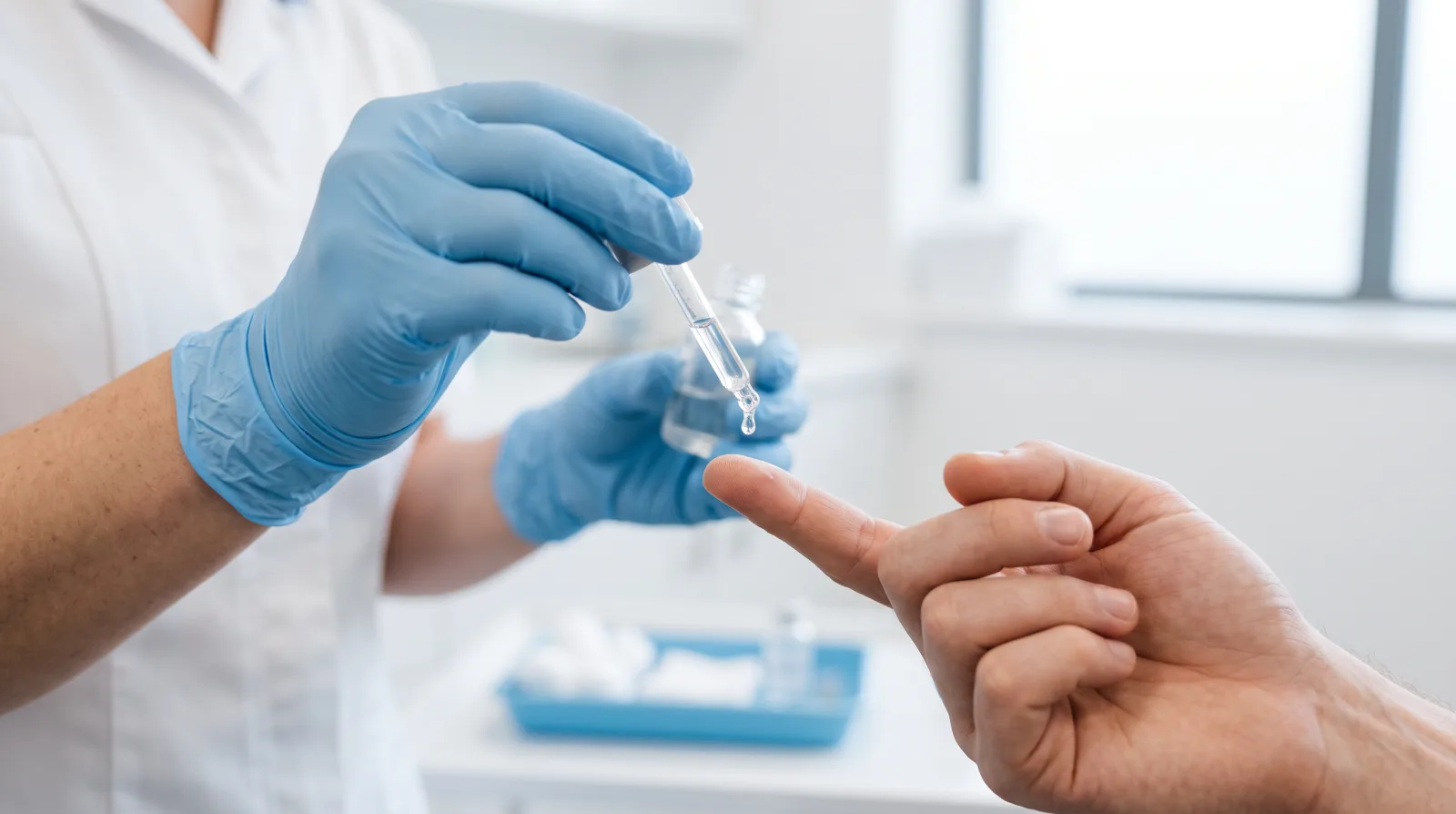
Topical peptides are short-chain amino acids that signal the skin to produce structural proteins such as collagen, elastin, and fibronectin. A 2024 systematic review published in the Aesthetic Surgery Journal Open Forum found consistent improvements in fine lines, skin elasticity, surface texture, and skin thickness across peer-reviewed clinical studies. The evidence base is more substantial than for most skincare actives, but penetration through the stratum corneum remains the critical limiting factor practitioners need to understand.
What topical peptides actually are
Peptides are chains of two or more amino acids, the same building blocks as proteins but assembled in shorter sequences. In skin biology, they function as signalling molecules. The skin produces them naturally as byproducts of extracellular matrix turnover; synthetic peptides are designed to mimic or amplify those signals.
The category covers a wide range of ingredients with very different mechanisms. "Peptide" in a product name tells a practitioner little on its own. What matters clinically is the mechanism of action, the molecular weight of the peptide chain, and the delivery system used to carry it past the skin barrier.
The four main classes and what they do
Signal peptides (matrikines) mimic fragments of degraded extracellular matrix proteins, triggering fibroblasts to produce new collagen, elastin, and fibronectin. Palmitoyl pentapeptide-4, widely known as Matrixyl, is the most studied. The lipid (palmitoyl) tail aids penetration through the stratum corneum; the peptide fragment then binds fibroblast surface receptors to upregulate collagen I and III gene expression. Research published in JAAD in 2023 demonstrated that novel synthetic tetrapeptides designed to mimic naturally occurring dermal protein fragments could stimulate fibrillin-rich microfibril deposition in human dermal fibroblast cultures, confirming that the signal-peptide mechanism extends well beyond established formulations.
Carrier peptides deliver trace elements to the dermis. Glycyl-L-histidyl-L-lysine:copper (GHK-Cu) binds copper ions and transports them to dermal cells, where copper acts as a cofactor for lysyl oxidase, the enzyme responsible for crosslinking collagen and elastin. GHK-Cu also has a direct stimulatory effect on collagen synthesis in fibroblast cultures, independent of its copper-delivery role.
Neurotransmitter-inhibiting peptides reduce the amplitude of muscle contraction signals at the neuromuscular junction. Acetyl hexapeptide-3 (Argireline) targets the SNARE complex using the same molecular machinery that botulinum toxin affects, but via competitive inhibition rather than irreversible cleavage. The effect is transient and confined to the area of application. Evidence for wrinkle reduction in expression-line areas comes from split-face studies; the effect size is modest compared to injectable treatment.
Enzyme-inhibitor peptides target matrix metalloproteinases (MMPs), the enzymes that degrade structural matrix proteins in photoaged skin. By inhibiting MMP-1 and MMP-3 activity, these compounds aim to slow extracellular matrix breakdown rather than directly stimulating new synthesis.
What the clinical evidence shows
The 2024 systematic review in the Aesthetic Surgery Journal Open Forum examined nine peer-reviewed clinical studies on topical peptide therapies. Outcomes that appeared consistently across the reviewed studies included:
- Improvements in the appearance of fine lines and wrinkles
- Improvements in skin elasticity and viscoelasticity
- Improvements in surface texture
- Increases in skin thickness measured by high-frequency ultrasound
The review also noted that topical peptides are not FDA-approved for medical indications. This regulatory distinction matters in UK clinical practice: peptide-containing products are classified as cosmetics under UK cosmetic regulation, not as medicinal products. They cannot legally carry claims to treat or prevent disease, which is worth bearing in mind when evaluating marketing language and advising clients.
Evidence quality limitations are worth noting. Many studies have short follow-up periods. Eight to twelve weeks is typical, and sample sizes are relatively small. Industry funding is common in this literature. Well-designed double-blind split-face trials do exist for the most studied compounds, particularly palmitoyl pentapeptide-4, but a significant proportion of ingredients in clinical use lack that level of independent data.
The penetration barrier practitioners need to understand
The most important constraint on topical peptide efficacy is one that rarely appears in product marketing: the stratum corneum is a highly effective barrier against hydrophilic molecules.
Most peptides have a molecular weight above 500 Daltons and are inherently hydrophilic. Both characteristics work against passive diffusion through intact stratum corneum. The 500 Da rule, originally established in transdermal drug delivery research, identifies this threshold as the point at which passive penetration becomes unreliable. A peptide that cannot reach the dermis cannot activate fibroblast receptors or influence collagen synthesis.
Manufacturers address this through several approaches: lipid conjugation (the palmitoyl tail on palmitoyl pentapeptide-4), nanoparticle encapsulation, liposomal delivery systems, and formulation in penetration-enhancing vehicle bases. Each approach has different supporting evidence. In clinical practice, peptide products applied after procedures that disrupt the skin barrier (microneedling, laser resurfacing, chemical peels) will have meaningfully different penetration profiles compared to application on intact skin.
When assessing a peptide-containing product for clinical use or client recommendation, the delivery system deserves as much attention as the peptide chain itself.
How peptides fit into a clinical skincare protocol
For practitioners building or recommending post-procedure skincare protocols, the evidence supports a clear framework.
Signal peptides, particularly the palmitoyl pentapeptide class and GHK-Cu, are appropriate supporting actives in a maintenance skincare programme targeting collagen remodelling. They are well-tolerated across skin types and do not carry the irritation or photosensitivity risk associated with prescription retinoids, making them a useful adjunct option where retinoids are contraindicated or poorly tolerated.
Neurotransmitter-inhibiting peptides have a more modest evidence base and a distinct mechanism. When clients ask whether topical Argireline is a realistic substitute for injectables, the honest answer is no. The mechanism overlaps at a molecular level, but the effect size and duration do not compare. The value of neurotransmitter-inhibiting peptides is as part of a wider maintenance protocol, not as a standalone cosmetic alternative to clinical treatment.
Enzyme-inhibitor peptides fit logically into photoaged skin protocols alongside antioxidants such as vitamin C and retinoids, where the combined aim is to slow matrix degradation while stimulating new synthesis.
Understanding which class a product belongs to, what delivery system it uses, and what evidence exists for that delivery approach is the minimum assessment threshold for any peptide product in clinical use. The Acne Decoded course and Hyperpigmentation Decoded course both cover active ingredient protocols in clinical depth, including how to evaluate evidence and build a coherent skincare plan around the treatments you offer.
Practitioners interested in what cosmeceuticals can and cannot claim, and where cosmetics sit relative to licensed medicinal products, will find the regulation section a useful starting point. The distinction shapes product purchasing decisions, supplier conversations, and how you discuss ingredients in client consultations.
If you want the structured clinical and regulatory walk-through, the Aesthetics Unlocked course catalogue covers active ingredient science, treatment protocols, and compliance in a single integrated programme built for UK practitioners.
FAQ
Are topical peptides evidence-based? Yes, with caveats. Several peptide ingredients, particularly palmitoyl pentapeptide-4 and GHK-Cu, have supporting evidence from randomised controlled trials. A 2024 systematic review in the Aesthetic Surgery Journal Open Forum found consistent improvements in fine lines, elasticity, and skin texture across studies. Evidence quality is limited by small sample sizes, short follow-up periods, and frequent industry funding.
Do topical peptides penetrate the skin? Penetration depends on molecular weight, hydrophilicity, and the delivery system. Most peptides exceed the 500 Dalton threshold that limits passive diffusion through intact stratum corneum. Lipid conjugation and nanoparticle delivery systems improve uptake. Application after procedures that disrupt the skin barrier increases dermal penetration significantly compared to application on intact skin.
Are topical peptides the same as botulinum toxin? No. Neurotransmitter-inhibiting peptides such as Argireline target the same SNARE complex that botulinum toxin affects, but via transient competitive inhibition rather than irreversible cleavage. The effect size, duration, and regulatory classification are entirely different.
Can practitioners recommend topical peptides to clients in the UK? Yes, as part of a skincare protocol. Peptide products are classified as cosmetics in the UK and carry no prescription requirement. Any claims that a product treats or prevents disease would breach UK cosmetic regulation, so practitioners should be alert to the marketing language used by suppliers.
Which class of peptide is most relevant to a post-procedure skincare protocol? Signal peptides, particularly the palmitoyl pentapeptide class, have the deepest evidence base for collagen remodelling. GHK-Cu has a well-established mechanism and supporting in vitro and clinical data. Both are appropriate inclusions in a post-procedure maintenance protocol where barrier disruption has temporarily improved penetration conditions.